Impaired Driving Impaired Driving

consequences of drinking and driving

Substantial issues with visual and auditory processing set in at a BAC of .15%, or around seven alcoholic drinks. Perception is impaired after four drinks, when you have a BAC of .08%. Impaired perception makes it challenging to accurately judge distance and speed. After about three drinks, when marijuana addiction your BAC reaches .05%, you may also lose control of small muscles in your eyes.

Will a DUI cause you to lose your driver’s license?

consequences of drinking and driving

Depending on the legal charges, some states may also require community service time or alcoholism treatment. In 2017, drunk drivers with a BAC of 0.08% were =https://ecosoberhouse.com/ responsible for the deaths of 10,784 people around the United States. 68% of these fatalities involved a driver with a BAC of 0.15% or higher. Despite the progress that has been made since The Minimum Drinking Age Act and the lowering of the legal drink driving limit, our country still has a long way to go. Learning about DUI and DWI laws and penalties is a vital aspect of your driver’s education program. Alcohol’s sedating effects impair a driver’s decision-making skills and coordination.

Permanent Injuries and Death

Everyone makes mistakes and the punishment for a first-time DUI typically coincides with the hope that it is enough to encourage the convicted party to avoid a repeat offense. However, for those prone to excessive alcohol consumption, there is reasonable concern of multiple DUIs over time. Some people think refusing to take a breathalyzer protects them from getting arrested for a DUI. An officer might look at evidence such as obvious impairment to determine whether you are guilty of driving while intoxicated. In such consequences of drinking and driving an instance, refusing to submit to a breathalyzer can likely still cost you your license.

Alcohol and the Skeletal System

consequences of drinking and driving

Unfortunately, when we’re inebriated, our decision-making abilities are also highly impaired. If you’ve ever driven after drinking in the past, you have a road map to examine all the decisions you made along the way that led to you getting behind the wheel. Researchers have identified seven possible decision points that can lead to drinking and driving (4). The study on Montana young adults also points to how the culture of drinking in one’s family can play a role in someone’s decision to drink and drive. At the heart of many decisions to drive drunk is the concern of how to get from point A to point B.

  • NHTSA’s Countermeasures That Work report assists state highway safety offices in selecting science-based traffic safety countermeasures for major highway safety problem areas, including impaired driving.
  • Not only to the driver, but also to those on the road around the driver operating the vehicle.
  • There are also mutual support groups like Alcoholics Anonymous that can help those suffering from alcohol use disorder (AUD) and those who have multiple DUIs stay sober.
  • During the Christmas and New Year holiday periods, we often see a rise in drunk-driving deaths.
  • A first-time offense can cost the driver upwards of $10,000 in fines and legal fees.
  • Even one DUI charge and conviction can have a vast and unintended effect on your life, and the consequences only get more harrowing with every added conviction.
  • In addition, a DUI conviction can cost you your license for an extended period.

Getting a DUI may also result in emotional consequences such as depression or PTSD, which affects your mental health. Deaths and injuries are the most severe outcomes of drinking and driving, but these aren’t the only potential consequences. In 2016, over one million drivers were arrested for driving under the influence (DUI). Impairment does not necessarily have to be from ingesting excessive alcohol or an illegal drug.

consequences of drinking and driving

Drinking and Driving Inhibits Good Judgment

Informed by her personal journey to recovery and support of loved ones in sobriety, Jessica’s empathetic and authentic approach resonates deeply with the Addiction Help community. The seemingly simple decision to attempt to drive home after drinking instead of grabbing a ride with friends or calling a taxi or rideshare could be the last decision you ever make. During driving, the device may also require additional samples to continue driving. Using an IID has strict compliance rules and additional fees, so it further impacts a person’s finances and freedom. DUI and DWI also restrict international travel and vacation choices, as some countries do not allow people with these convictions on their records to enter.

consequences of drinking and driving

Alcohol and the Liver

consequences of drinking and driving

In almost all jurisdictions, if you want your driving privileges returned after a drunk driving conviction, you will have to complete an alcohol and drug education and assessment program. For repeat offenders, jail is mandatory in most states and the terms are longer than a couple of days. If there are aggravating circumstances connected with your DUI case, such as having prior convictions, the DUI may be a felony versus a misdemeanor, which means that penalties such as jail time can be increased.


Drunk Driving Facts, Consequences, & DUI Prevention Resources

consequences of drinking and driving

A robust campaign against drunk driving was conducted this weekend leading to the apprehension of a significant 237 offenders. Correlation between THC concentration in whole blood and accident risk (from Grotenhermen et al. (2007)78 based on data from Drummer et al.73). Alcohol use disorder (AUD), or alcohol addiction or alcoholism, is a chronic relapsing brain disease. It develops when you misuse alcohol despite knowing its adverse effects.

The Recovery Industry Is Evolving to Include Medicine for AUD

  • One way to measure the amount of alcohol in a person’s system is to measure Blood Alcohol Concentration (BAC).
  • If you were publicly intoxicated but not attempting to drive, you might get held overnight for your safety or, if you were loud and troublesome, charged with disturbing the peace.
  • Alcohol involvement is also much higher in fatal crashes on weekends (28%) than on weekdays (16%).
  • Just one drink or a small number of drinks can make you unsafe behind the wheel and put your life and the lives of others at risk.

Additionally, higher alcohol taxes and reduced/limited alcohol sales/outlets can affect alcohol-impaired driving and crashes. These types of countermeasures are not included in this chapter as SHSOs have little or no authority or responsibility for them. The arrested drivers included 191 two-wheeler riders, 35 four-wheeler drivers, and 11 three-wheeler operators. Authorities noted a sharp rise in violations, highlighting the pressing need to tackle the growing issue of drunk driving in the region. Among those apprehended, 19 individuals were found with blood alcohol concentrations (BAC) ranging from 200 mg/100 ml to 550 mg/100 ml, far exceeding the legal limit.

2.2 Studies that show impairment

consequences of drinking and driving

Opt to use a rideshare app, grab a taxi, hop on public transportation, walk if it’s safe to do so, or appoint a reliable designated driver. Staying overnight at a friend’s house or in a hotel may also be an option on certain occasions. Preventing drinking and driving starts before the next time you plan to drink. You can use a technique of examining each individual decision you made in the past that led to a specific outcome, such as driving under the influence. The DOT study mentions other transportation reasons as well, such as not wanting to leave a vehicle somewhere or having to retrieve it the next day (4).

Drunk Driving Is Deadly

If you are arrested on suspicion of drunk driving, you will be placed into a police vehicle and taken to the nearest police station or jail, where you’ll be photographed and fingerprinted. This can be a frightening experience that can bring on anxiety and panic, especially for first-time offenders. You may experience some loss of judgement after just two drinks, while significant impaired judgment occurs at a BAC of .08%. You may also experience a decline in your self-control and reasoning at this level of intoxication. A DUI arrest will have an immediate negative impact, as many states will automatically suspend your driver’s license.

consequences of drinking and driving

Alcohol Detox: Guidelines for Successfully Detoxifying from Alcohol

  • Every person is different in terms of how they process alcohol based on biological sex, weight, food intake, level of tolerance to alcohol and other factors.
  • The first are cognitive studies that measure the effects of smoking marijuana on cognitive processes that are considered to be integral to safe driving.
  • A substantial proportion of pedestrians killed in crashes also have high BACs—almost than one-third (30%) of fatally injured pedestrians have BACs of .08 g/dL or higher (NCSA, 2023b).
  • These pedestrians tend to be older males, and the crashes typically occur on weekend nights at non-intersection locations (Hezaveh & Cherry, 2018).
  • Some people might try to trick the device by having someone else blow into it.
  • Dr. Hoffman is the Co-Founder and Chief Medical Officer of AddictionHelp.com and ensures the website’s medical content and messaging quality.

All those caught will be produced before the H’ble court,” reads alcoholism symptoms the caption of the post. Just one drink before driving can put you and others in danger, because alcohol impairs thinking, reasoning and muscle coordination. A DUI can set you back, on average, $10,000, and there could be a crash — people could get hurt or killed. NHTSA provides statistics about impaired driving, materials for campaigns against impaired driving, and case studies of effective practices to stop impaired driving. An estimated 20 percent of adults in the U.S. drink alcohol to help them fall asleep. However, alcohol use has a direct, adverse effect on a person’s sleep quality.

consequences of drinking and driving

Losing Your Driver’s License

A trained counselor will evaluate your pattern of alcohol consumption to determine if you have an alcohol use disorder. Typically, the evaluator will ask you a series of questions about how alcohol affects your life. In all states, your sentence will include the loss of driving privileges for consequences of drinking and driving a period of time, even for a first-time DUI conviction. Some states offer a hardship license that allows you to drive to work or school during the time your license is revoked or suspended, but your driving privileges will still be drastically curtailed. For some drivers, it feels humiliating to have to appear in public to answer charges of driving drunk. A DUI arrest often coincides with the immediate seizure of your driver’s license.

  • Clear vision is essential for drivers, but excessive alcohol consumption can impair visual acuity.
  • This often affects college students and young professionals who attend parties and other social events that have easy access to alcohol.
  • In almost all jurisdictions, if you want your driving privileges returned after a drunk driving conviction, you will have to complete an alcohol and drug education and assessment program.
  • Motorists must accurately assess the distance needed to stop and navigate turns without striking anything.

How Long Does it Take to Sober Up from Alcohol?

The other 38% were passengers in the vehicle, other drivers and passengers on the road, or pedestrians. These were preventable deaths, as were the 229 children under 14 years old killed in alcohol-related crashes that year. According to the Centers for Disease Control and Prevention (CDC), 62% of those who died in crashes involving alcohol-impaired drivers in 2020 were the alcohol-impaired drivers themselves. This slows down reaction time, increasing the risk of car accidents as you cannot react as fast as you would without alcohol in your system. For instance, if another driver cuts you off suddenly, you may be more likely to hit them because of impaired reaction time, making =https://ecosoberhouse.com/ it difficult to think and respond fast enough to hit the brakes.

consequences of drinking and driving

Physical Effects of Alcohol

Dr. Hoffman is the Co-Founder and Chief Medical Officer of AddictionHelp.com and ensures the website’s medical content and messaging quality. Don’t shy away from Alcoholics Anonymous (AA) Meetings, as joining a support group like AA can provide you with community, accountability, and encouragement from others experiencing similar struggles. For those seeking addiction treatment for themselves or a loved one, all phone calls are confidential and are available for 24/7 help. All calls will be answered by Pinnacle Health Group or Still Behavioral Health Group, both of whom are paid advertisers. Any treatment center receiving calls from the site is a paid advertiser. Calls to numbers on a specific treatment center listing will be routed to that treatment center.

What Is Underapplied vs Overapplied Overhead in Budgeting?

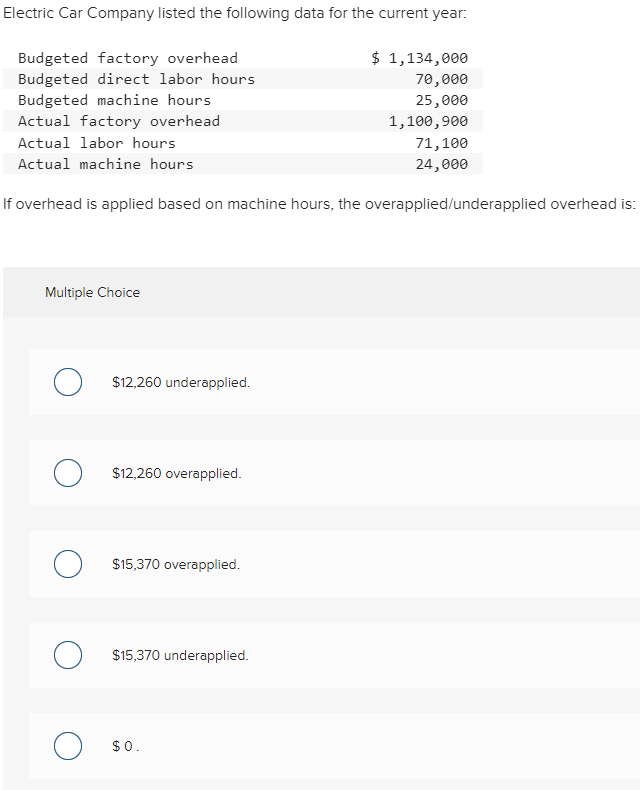
overapplied or underapplied overhead

By doing so, the gross profit and net income figures on the income statement are corrected, providing a more accurate representation of the company’s profitability. At the end of the year, with the full benefit of hindsight, the company knows what its actual factory overhead expenses have been. Since the company charged off only $288,450, it has “underapplied overhead” of $11,550. If the actual overhead had come to $270,000, the company would have charged off more than was necessary, and it would have “overapplied overhead” of $18,450. Note that the preliminary estimate of overhead costs, $250,000, doesn’t factor in here. In cost accounting, managing overapplied overhead is a critical task that can significantly influence an organization’s financial health.

Products

This means management can’t wait until the end of the period to add up all of the overhead costs incurred and allocate them to each job. Instead, management needs to estimate the future overhead costs and allocate them throughout the production process. As noted above, underapplied overhead is reported on a company’s balance sheet as a prepaid expense or a short-term asset. In order to reconcile this, the company’s accounting department generally inputs a debit by the end of the year to the COGS section and a credit to the prepaid expenses section.

Example of Overapplied Overhead

This is referred to as an unfavorable variance because it means that the budgeted costs were lower than actual costs. Put simply, the business went over budget making the cost of goods sold more than expected. A journal entry must be made at the end of the period to reconcile the difference between the estimated amount and the actual overhead costs. In this case we would, debit the factory overhead account and credit the cost of goods sold account for the difference. Another strategy involves leveraging technology for real-time data analysis and monitoring.

overapplied or underapplied overhead

OpenStax

  • This is referred to as an unfavorable variance because it means that the budgeted costs were lower than actual costs.
  • This can distort the true financial position of the company, as the assets on the balance sheet appear more valuable than they are.
  • Over the long-term, the use of a standard overhead rate should result in some months in which overhead is overapplied, and some months in which it is underapplied.
  • To determine applied overhead, the company needs to know its budgeted overhead and actual overhead.
  • In this book, we assume companies transferoverhead balances to Cost of Goods Sold.
  • To adjust for this, an entry is made to debit the manufacturing overhead account and credit the cost of goods sold (COGS) account.

To determine overapplied overhead, one must first understand the components involved in overhead allocation. Overhead costs include indirect expenses such as utilities, depreciation, and maintenance, which are not directly traceable to specific products. These costs are allocated to products using a predetermined overhead rate, often based on direct labor hours, machine hours, or another activity driver. This rate is established at the beginning of the accounting period based on estimated overhead costs and estimated activity levels. Sometimes the estimate is more than the actual amount and sometimes it’s less than the actual amount. Overapplied overhead happens when the estimated overhead that was allocated to jobs during the period is actually more than the actual overhead costs that were incurred during the production process.

This proactive approach helps in making necessary adjustments before the end of the accounting period, thereby minimizing the impact on financial statements. Advanced software tools like SAP and Oracle can facilitate this process by providing real-time data and analytics, what is a simple tax return enabling more informed decision-making. For a company engaged in manufacturing, determining the value of inventory can be complicated. The company must account for the raw materials used in making its products, the direct labor required and any manufacturing overhead.

Overapplied Overhead Definition Becker

In a sense, the production managers came in “under budget” and achieved a lower overhead than the cost accountants estimated. In this case, XYZ Corp. will need to make an adjustment to its accounting records to account for the overapplied overhead. This could involve decreasing the cost of goods sold, or adjusting other inventory accounts depending on the company’s accounting policy. This will ensure the company’s financial statements accurately reflect the actual overhead costs incurred during the period.

Addressing underapplied overhead involves adjusting journal entries to increase COGS and inventory values, thereby aligning them with actual costs. This adjustment ensures that financial statements accurately reflect the company’s expenses and profitability. Regular variance analysis and monitoring are crucial for identifying and correcting both overapplied and underapplied overhead. By maintaining accurate overhead allocation, companies can improve their financial reporting and make more informed strategic decisions. Adjusting journal entries are necessary to correct the financial distortions caused by overapplied overhead.

On the other hand, if the manufacturing overhead has a credit balance it means that that the applied overhead is more than the actual overhead. In this case, if the manufacturing overhead has a debit balance it means that that the applied overhead is less than the actual overhead. The presence of overapplied overhead can significantly alter the presentation of an organization’s financial statements. When overhead is overapplied, it means that the cost of goods sold (COGS) is understated, leading to an inflated gross profit.

Overapplied overhead, on the other hand, occurs when a company has overhead costs less than its budgeted costs. To determine applied overhead, the company needs to know its budgeted overhead and actual overhead. Companies use overhead analysis to determine their efficiency during a period of controlling overhead costs. Overapplied overhead occurs when the total amount of factory overhead costs assigned to produced units is more than was actually incurred in the period.

This will result in an excess charge of $15,000 to the cost of goods sold, if the situation is not corrected. To do so, the company’s controller debits the manufacturing overhead cost pool for $15,000, while crediting the cost of goods sold account for the same amount. The result is a cost of goods sold that incorporates only the actual overhead costs incurred during the month of March.

These entries ensure that the financial statements accurately reflect the company’s actual costs and financial position. The process begins by identifying the amount of overapplied overhead, which is the difference between the allocated overhead and the actual overhead incurred. Once this amount is determined, it must be removed from the accounts where it was initially applied.

Overapplied Overhead Definition

overapplied or underapplied overhead

One strategy is to refine the predetermined overhead rate by using more accurate and dynamic allocation bases. For example, activity-based costing (ABC) can provide a more precise method of allocating overhead by linking costs to specific activities and cost drivers. This approach helps in identifying inefficiencies and areas for cost reduction, ultimately leading to more accurate overhead allocation.

6: Determine and Dispose of Underapplied or Overapplied Overhead

  • Once the period concludes, actual overhead costs and actual activity levels are recorded.
  • Now the machine shop has to book an additional $600 of overhead expense because the original estimate what under applied.
  • Most managers want to be able to show a profit even after overhead expense, so an estimated amount of overhead is applied for each period.
  • One strategy is to refine the predetermined overhead rate by using more accurate and dynamic allocation bases.
  • The next step involves comparing the allocated overhead, calculated using the predetermined rate, to the actual overhead incurred.
  • After this journal entry, the balance of manufacturing overhead will become zero.

In a sense, the production managers came in “under budget” and achieved a lower overhead than the cost accountants estimated. In this case, XYZ Corp. will need to make an adjustment to its accounting records to account for the overapplied overhead. This could involve decreasing the cost of goods sold, or adjusting other inventory accounts depending on the company’s accounting policy. This will ensure the company’s financial statements accurately reflect the actual overhead costs incurred during the period.

Products

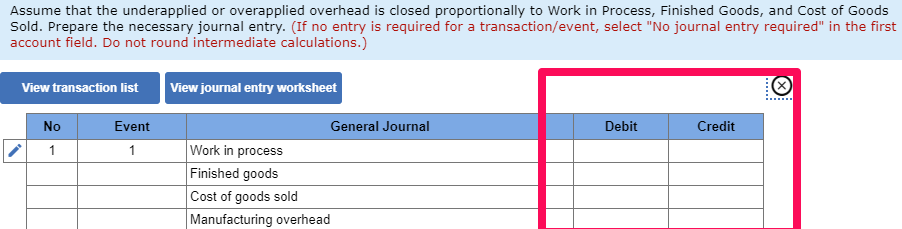
These may be explained by expected hiccups in production, business, or seasonal variation. It is useful to note that some companies may use the more accurate method, but more time-consuming, to reconcile the underapplied or overapplied overhead. That method will not only allocate the overhead to the cost of goods sold but also to the work in process inventory account and the finished goods inventory account. Effective management of overapplied overhead requires a combination of proactive planning and continuous monitoring.

overapplied or underapplied overhead

Overapplied Overhead

In this book, we assume companies transferoverhead balances to Cost of Goods Sold. We leave the morecomplicated procedure of allocating overhead balances to inventoryaccounts to textbooks on cost accounting. If not adjusted, the overapplied amount can lead to an overstatement of net income. This can have tax implications, as higher reported earnings may result in a larger tax liability. Additionally, it can affect dividend distributions, as companies might distribute more profits than they actually earned, potentially straining cash flows. Since we will be using the concept of thepredetermined overhead rate many times during the semester, letsreview what it means again.

What is Overapplied Overhead?

This will result in an excess charge of $15,000 to the cost of goods sold, if the situation is not corrected. To do so, the company’s controller debits the manufacturing overhead cost pool for $15,000, while crediting the cost of goods sold account for the same amount. The result is a cost of goods sold that incorporates only the actual overhead costs incurred during the month of March.

Overapplied overhead, on the other hand, occurs when a company has overhead costs less than its budgeted costs. To determine applied overhead, the company needs to know its budgeted overhead and actual overhead. Companies use overhead analysis 9 states with no income tax to determine their efficiency during a period of controlling overhead costs. Overapplied overhead occurs when the total amount of factory overhead costs assigned to produced units is more than was actually incurred in the period.

These entries ensure that the financial statements accurately reflect the company’s actual costs and financial position. The process begins by identifying the amount of overapplied overhead, which is the difference between the allocated overhead and the actual overhead incurred. Once this amount is determined, it must be removed from the accounts where it was initially applied.

McBride is an attorney with a Juris Doctor from Case Western Reserve University and a Master of Science in accounting from the University of Connecticut. Textbook content produced by OpenStax is licensed under a Creative Commons Attribution-NonCommercial-ShareAlike License .

To determine overapplied overhead, one must first understand the components involved in overhead allocation. Overhead costs include indirect expenses such as utilities, depreciation, and maintenance, which are not directly traceable to specific products. These costs are allocated to products using a predetermined overhead rate, often based on direct labor hours, machine hours, or another activity driver. This rate is established at the beginning of the accounting period based on estimated overhead costs and estimated activity levels. Sometimes the estimate is more than the actual amount and sometimes it’s less than the actual amount. Overapplied overhead happens when the estimated overhead that was allocated to jobs during the period is actually more than the actual overhead costs that were incurred during the production process.